Seller Central vs Vendor Central: Which Is Better for My Brand?
With Seller Central, you sell to shoppers on Amazon and you set your own price. With Vendor Central, Amazon buys your products at a wholesale price and sells them itself. Seller Central is open to most brands. Vendor Central is usually by invitation. Seller gives more control. Vendor can mean less work, but Amazon sets the retail price and has its own terms.
The big idea
Both are ways to sell on Amazon. They work in different ways.
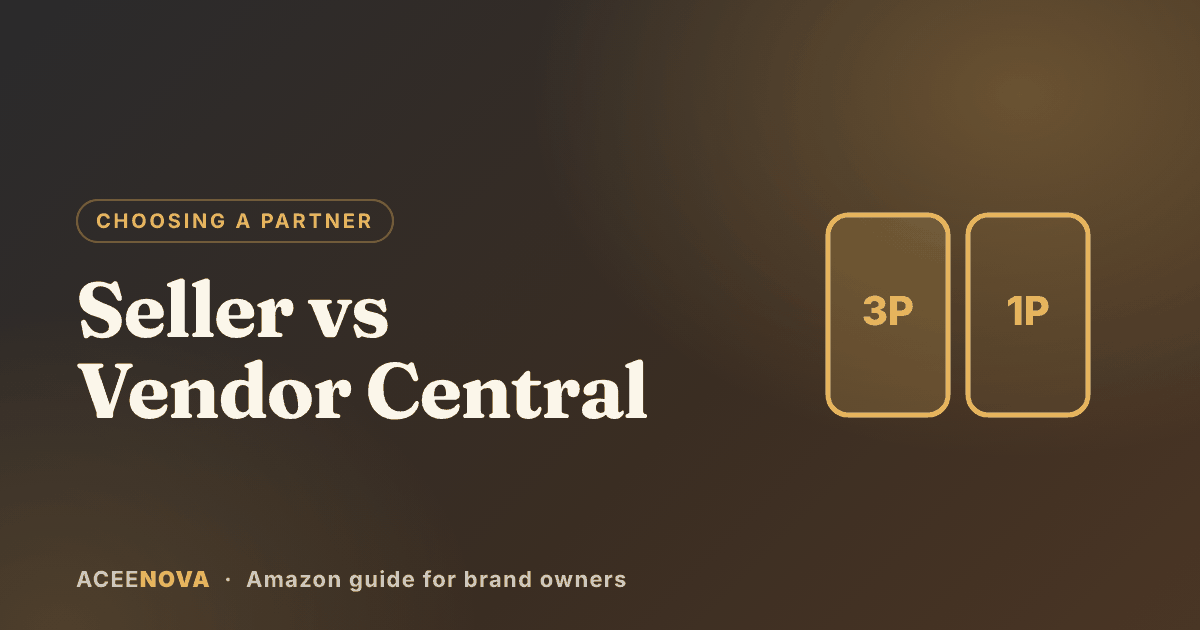
- Seller Central (often called 3P, for third party). You sell your product to shoppers. You keep ownership of the stock until the sale. You set the price.
- Vendor Central (often called 1P, for first party). Amazon buys your product from you at a wholesale price. Then Amazon sells it to shoppers. Amazon sets the retail price.
Side by side
| Topic | Seller Central | Vendor Central |
|---|---|---|
| Who sells to the shopper | You | Amazon |
| Who sets the price | You | Amazon (you set the wholesale price) |
| How you get in | Open to most brands | Usually by invitation |
| Shipping | FBA or you ship (FBM) | You ship to Amazon after a purchase order |
| Fees | Referral, FBA, storage, ads | Amazon takes a margin. There can also be allowances and other fees. |
| Control of the page | More | Less. Amazon has more say on details. |
| Work for you | More | Often less day to day |
Seller Central: control and responsibility
With Seller Central you decide your price, your photos, your ads, and your stock. You also carry the work and the risk. You manage fees, stock, customer questions, and problems like suppressed listings and lost Buy Box.
This fits brands that want control and can manage the work, or can hire help.
Vendor Central: convenience and less control
With Vendor Central, you get purchase orders from Amazon. You ship the goods, and Amazon sells them. That can mean less work for you. But Amazon chooses the retail price. Amazon may also ask for terms such as allowances or payments for marketing programs. Read the contract with care.
Vendor Central is usually by invitation. You can ask Amazon, but you cannot count on a yes.
When a brand might switch
- A brand on Seller Central that is invited to Vendor Central may think about it. They should compare real numbers and the terms.
- A brand on Vendor Central that wants more control of price and listings may think about moving to Seller Central.
- Some brands use both for different products. Amazon's rules on this can change, so check them first.
Switching is a big step. Talk to an expert who has done it.
A simple example
This example is made up. Imagine a brand that sells baby bibs. It is on Seller Central and pays fees and ad costs, and it controls its price. Amazon invites it to Vendor Central. The brand checks the terms: the wholesale price is lower than its normal price, and it may owe extra fees. It chooses to stay on Seller Central for now.
What about selling to a reseller?
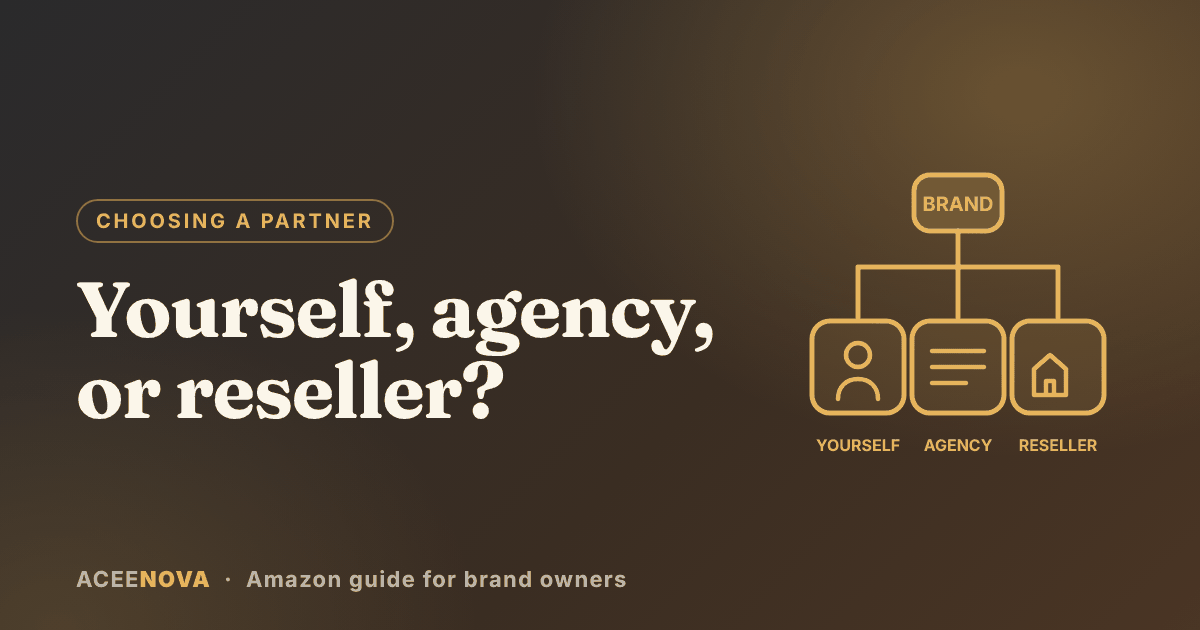
There is also a third path that is neither Seller nor Vendor for your brand. A reseller or partner buys from you at wholesale and sells on Amazon with their own account. You then sell cases to them and do not manage the account. That is the model AceeNova uses. It does not fit every brand, because you give up some control. See Sell on Amazon Yourself, Hire an Agency, or Sell to a Reseller?
Whichever way you go, Brand Registry helps you protect your brand.
Quick checklist
- Do you want control of price and page?
- Do you have time to manage the work?
- Have you been invited to Vendor Central?
- Did you compare real numbers and terms?
- Do you have Brand Registry?
If you want to talk through which setup fits your brand, we are happy to listen. Book a free call
FAQ
What is the difference between Seller Central and Vendor Central?
In Seller Central you sell to shoppers and set your own price. In Vendor Central Amazon buys your products at a wholesale price and sells them itself.
Can I choose Vendor Central?
Usually not. Amazon sends invitations to brands it wants. You can contact Amazon, but there is no promise.
Which one gives more control?
Seller Central gives more control over price, listings, and ads.
Can I use both?
Some brands do, but it needs care. Amazon can also move a brand from one to the other. Read the current rules.
Is Vendor Central more profitable?
Not always. You may save work, but Amazon takes a margin and you may face fees and terms. Compare real numbers.